
In a universe of endless motion we yearn for stillness, something that T S Eliot captured in the first poem of Four Quartets, ‘Burnt Norton’:
At the still point of the turning world.
Neither flesh nor fleshless;
Neither from nor towards; at the still point, there the dance is,
But neither arrest nor movement.
And do not call it fixity, Where past and future are gathered.
Neither movement from nor towards, Neither ascent nor decline.
Except for the point, the still point,
There would be no dance, and there is only the dance.
I can only say, there we have been: but I cannot say where.
In the midst of chaos
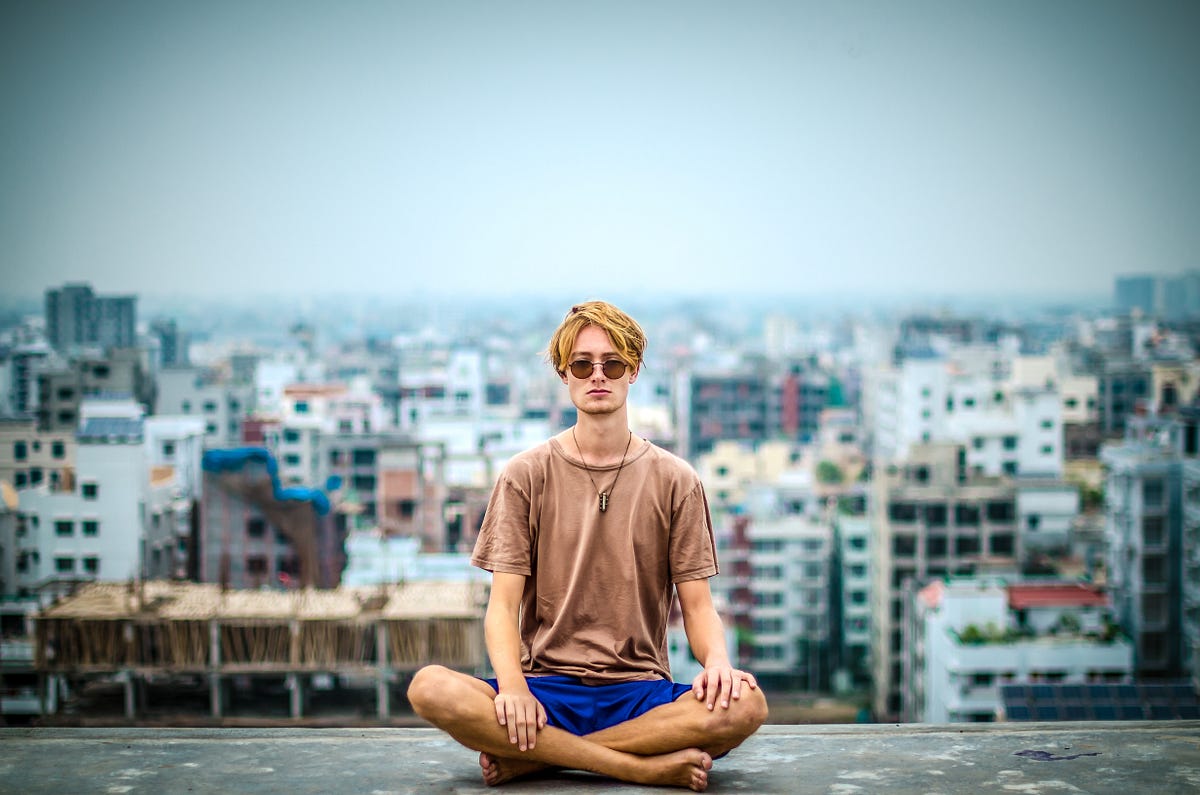
Photo by Isabell Winter on Unsplash
Being still is not what the world encourages. We drown in images, in short bursts of texts, instant messages and immediate ‘likes’. ‘Fast’, ‘more’, ‘bigger’, ‘multi-tasking’, ‘10x-ing’ your life and ‘productivity’ are our contemporary watchwords. We hurtle from task to task, juggle commitments and live with increasing levels of speed and stress. To soothe us, we shop, watch vacuous entertainment, surf the Internet or hang out on social media that is, for the most part, anything but social.
Increasingly, more and more people are afraid to simply stop and be. To do so invites a gap into which all kinds of thought and questions might enter. Better to spend hours browsing in order to buy a cute sweater than to face what is inside.
But is it? This is life in the shallows. Not because people are inherently shallow or thoughtless but because in such a break-neck world all of us become dazed, fatigued and more likely to reach for the quick paliative than to dig for hidden water with which to refresh our lives.
If we are going to write and make a difference, even if only to a couple of people, even if only to ourselves, then we have to break this cycle and be still.
In an interview later published in Nobel Lectures in Literature, Saul Bellow says:
Art has something to do with the achievement of stillness in the midst of chaos…
Ironically, we often tell ourselves there is no time in our lives for being still. We can list all the work we have, the domestic responsibilities, the commitments we’ve made… Of course, they are true but, despite the modern mantra of productivity, many of us in the western world still have a huge arena of choice in how we spend a good portion of our time.
What if we give some of that time to being still?
Movements in the the mind

Photo by Sean Stratton on Unsplash
In The Art of Stillness, Pico Iyer talks about interviewing Leonard Cohen during the song-writer’s five years of seclusion in the Zen centre at Mount Baldy. Cohen told him that sitting still had become a passion and described stillness as:
the real deep entertainment. Real profound and voluptuous and delicious entertainment. The real feast that is available within this activity.
When we are still. When we stop rushing around and go nowhere, do nothing. When we are simply being, we make space for a different kind of movement, not of busyness but of profound thought. The artist Joan Miró was acutely aware of this in his work.
[Stillness] strikes me. This bottle, this glass, a big stone on a deserted beach — these are motionless things, but they set loose great movements in my mind…
[Stillness] makes me think of great spaces in which movements take place which do not stop at a given moment, movements which have no end. It is, as Kant said, the immediate irruption of the infinite in the finite. A pebble which is a finite and motionless object suggests to me not only movements, but movements without end. […]
What I am seeking, in fact, is a motionless movement, something equivalent to what is called the eloquence of silence, or what St. John of the Cross meant by the words, I believe, of dumb music.
[…]
The same practice makes me seek the [sound] hidden in silence, the movement in [stillness], life in the inanimate, the infinite in the finite, forms in space and myself in anonymity… By denying negation one affirms.
When our minds are full of work, shopping lists, tasks to be done, or when we focus on producing more and faster, our thoughts become clogged and we risk burning ourselves out, often only to start again and repeat the awful cycle.
When we de-clutter our thoughts, refuse the distractions and stop for a while, we start to see and hear and attend. We may find that there’s a cacophony inside, that we have to practice stillness repeatedly. But when we do, our thoughts change. They become less frenetic and fragmented. They become less ego-centred and switched to survival mode. Gradually our thoughts go deeper, and find fresh pools of inspiration and imagination.
Why is this particularly important for writers?
In the stillness

Creative people of all kinds need space in their minds.
When we overload our lives with frantic activity we’re less likely to live in the moment. We are always concerned, instead, with the next thing on the list and the next and the next… This is inimical to creating anything.
To achieve flow states as artists, creative scientists or writers we need this space.
To have a shot at being people who care about and witness to the world we live in, we have to be able to see what is happening in the world. We won’t do that in a state of high-speed distraction.
Stillness, whether it’s five minutes of meditation the instant you wake up; cooking in silence, slowly chopping vegetables in the company of your thoughts; or taking ten minutes in the middle of the day to do nothing but sit quietly, is not only good for our sanity and health, but for our creativity.
Of course, as Eliot intimates in his lyrical mediation on time in ‘Burnt Norton’ stillness is not fixity. The paradox between stillness and movement is at the heart of what Miró was attempting to touch in his art. And, as Alan Lightman points out in Searching for Stars on an Island in Maine, every atom of us is an extraordinary nexus of motion, electrons whizzing around a central nucleus and:
Since we and everything else are made of atoms, we are mostly empty space. That vast emptiness is perhaps the most unsettling consequence of dividing the indivisible.
Still to move

Photo by Natalia Figueredo on Unsplash
Restlessness is perhaps at the core of the human condition. And as writers we witness to this humanity. We’re as restless as everyone else. We’re as liable to distraction. And yet, if we are to move the world with our words, we need to rest in the questions and the paradox. We need to make a place not for ‘fixity’, but stillness.
Becoming a different story
Thank you for reading — sign up to my email list and I’ll send you a free PDF on writing and the writing life as well as a fantastic special offer for my new suite of online mini-retreats, Diving Deeply into Your Story. While you’re there, download my free course, Giving yourself time to become a different story.
Thanks for this. Yesterday stillness was being halted by the sight of a butterfly – nothing else was in my mind except the peacock glory of it.
Love that Shirley – very Miro 🙂
Essential knowledge many thanks for the beauty of this